
Third Holistic Impact Report also confirms findings across three national
studies that graduates of Catholic colleges report more meaningful lives,
greater community engagement and stronger ethical commitments
SAN ANTONIO, Sept. 3, 2026 /PRNewswire/ — As colleges and universities grapple with how artificial intelligence is reshaping education and work, a national study has found that graduates of Catholic colleges and universities report greater engagement with and preparedness for AI than graduates of secular institutions.
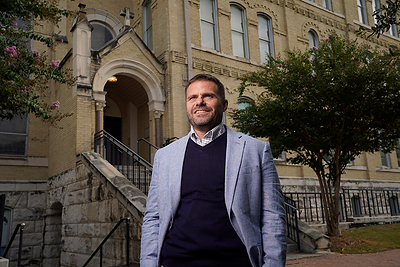
The findings come from HIR 3.0, the third iteration of the Holistic Impact Report, commissioned by the Center for Catholic Studies at St. Mary’s University and conducted in partnership with YouGov. HIR 2.0 and HIR 3.0 both found greater engagement with AI among graduates of Catholic institutions.
At the same time, across all three iterations of the national study, graduates of Catholic colleges and universities report more meaningful lives, greater community engagement and stronger commitments to ethical principles in their decision-making.
“After three studies, we are seeing a remarkably consistent picture of what Catholic higher education contributes to graduates’ lives,” said Jason King, Ph.D., Beirne Chair and Director of the Center for Catholic Studies at St. Mary’s University. “The findings on AI are particularly interesting because the greater confidence graduates of Catholic colleges express in engaging this new technology is accompanied by a stronger sense of meaning and purpose in their lives and work.”
AI and Meaningful Work
HIR 3.0 found that graduates of Catholic colleges and universities report greater engagement, support and preparedness for artificial intelligence. Compared with graduates of secular colleges and universities:
- 8% more graduates of Catholic colleges use AI at least daily (44% vs. 36%).
- Graduates of secular colleges are less likely to use AI at all; 24% report never using AI, compared with 21% of graduates of Catholic colleges.
- More graduates of Catholic colleges feel that their institution at least moderately prepared them to use AI (33% vs. 23%).
- 36% of graduates of Catholic colleges believe AI will have a significant or transformative benefit for society, compared with 28% of graduates of secular colleges.
These findings continue a pattern first found in HIR 2.0, which also found that graduates of Catholic colleges and universities reported greater use of AI, greater preparedness to use it, and more positive assessments of its impact.
The results come as Pope Leo XIV has called for a distinctly human approach to technological change. In his new encyclical, Magnifica Humanitas, Leo describes technological progress as “valuable in itself” while emphasizing the need to discern “the ends it pursues” and to prioritize the human person.
HIR 3.0’s findings suggest this kind of context with its results on meaningful work. Seventy-five percent of graduates of Catholic institutions say they view their career or profession as a meaningful calling, compared with 66% of graduates of secular institutions. Graduates of Catholic institutions are also more likely to say their life’s work aligns with their core values (79% vs. 70%) and significantly more likely to say that their college or university helped them understand how their work can serve others (71% vs. 56%).
These differences in meaning and purpose do not come at the expense of economic outcomes. Employment rates are higher among graduates of Catholic colleges, with 73% reporting full- or part-time employment compared with 67% of graduates of secular colleges. Seventy-six percent of graduates of Catholic colleges report homeownership, a rate comparable to graduates of secular colleges. And graduates of Catholic colleges are more likely to report household incomes of $100,000 or more (52% vs. 47%).
Three Studies, Consistent Results
HIR 3.0 also replicates the central findings of HIR 1.0 and HIR 2.0. In the latest study, 72% of graduates of Catholic colleges and universities say they understand their life’s meaning, compared with 64% of graduates of secular institutions. Graduates of Catholic institutions are also more likely to report fulfillment in their community involvement (64% vs. 55%) and to have volunteered during the previous six months (49% vs. 42%).
The pattern in ethical decision-making also continues. Graduates of Catholic colleges and universities rated all seven moral considerations included in HIR 3.0 as more relevant to their moral judgments than graduates of secular institutions did. While specific percentages vary across the three years of the study, the broader findings have remained consistent: Graduates of Catholic colleges and universities report advantages in meaning and life satisfaction, community engagement and the importance they place on ethical principles.
What in College Makes a Difference?
HIR 3.0 also asked graduates for the first time which parts of their college experience had been most influential in shaping their lives after graduation. The results offer a first look at the educational experiences graduates themselves associate with their later development. While graduates of both Catholic and secular colleges identified a range of important influences, some of the largest differences between the two groups appeared in professors, campus culture and community, and the core curriculum:
- Professors showed a large difference, with 58% of graduates of Catholic colleges describing them as important or very important influences, compared with 44% of graduates of secular colleges.
- Graduates of Catholic colleges were significantly more likely to describe campus culture and community as important or very important (48% vs. 35%).
- The core curriculum also stood out strongly, with 54% of graduates of Catholic colleges describing it as an “important” or “very important” influence, compared with 42% of graduates of secular colleges.
The study examines a broad range of educational, professional and personal outcomes among graduates of Catholic and secular colleges and universities. The ongoing project seeks to broaden national conversations about the value of higher education beyond traditional measures, such as earnings and employment.
“Catholic universities across the country have something incredible in common: a commitment to mission and a focus on holistic education. The results our graduates see directly reflect our shared Catholic foundation,” said St. Mary’s University President Winston Erevelles, Ph.D. “St. Mary’s University offers an example of how a close-knit community of educators teaching in the Catholic Intellectual Tradition can impact students across their lifetime.”
In June, Erevelles was among 21 presidents of Catholic Colleges and Universities who had a private audience with Leo, during which the pope referenced Magnifica Humanitas and the decisive importance of Catholic education in today’s world. The encyclical stated, “One of the challenges that the world of education is currently facing is the increasing fragmentation of knowledge. While it is easy to find people who are experts in a particular field of study, many of these individuals struggle to find direction in their lives, partly due to an inability to connect information with deeper knowledge or maintain a sense of purpose.”
“I believe that the education we provide at St. Mary’s University, and many other Catholic institutions, responds to the challenge of educating young men and women to be adept with new technologies while also using their gifts of critical thinking to learn to love and seek the truth,” Erevelles said.
King draws on the HIR research in his forthcoming book, The Soul of Catholic Higher Education: Fostering Purpose, Identity and Community, which will be available later this year. The book applies the findings to suggest how Catholic colleges can navigate the challenges and changes facing higher education.
For more information about the Holistic Impact Report and the Center for Catholic Studies, visit www.stmarytx.edu/catholic-studies.
St. Mary’s University, founded in 1852, is the first institution of higher learning in San Antonio and the oldest Catholic university in the Southwest. Inspired by its Marianist identity, the University’s vision is to be a premier Catholic university distinguished by academic excellence, transformative learning and a welcoming community that empowers graduates to lead with purpose, serve with integrity and shape a changing world.
 View original content to download multimedia:https://www.prnewswire.com/news-releases/new-national-study-finds-graduates-of-catholic-colleges-feel-more-prepared-for-ai-302868327.html
SOURCE St. Mary’s University
